| More Info |
● Safety Note: Saffron essential oil is highly concentrated, and should always be diluted with a carrier oil before topical application. It’s recommended to perform a patch test to ensure no allergic reactions or sensitivities.
● Storage: To maintain the potency of saffron essential oil, store it in a cool, dark place, away from heat and sunlight.
● Sustainability: Given its high cost and labor-intensive extraction process, it’s essential to ensure that saffron is sourced responsibly and sustainably. Look for ethical sourcing practices to ensure the preservation of the plant and the livelihoods of local communities.
Historical Importance:
Saffron has a rich history in various ancient cultures, dating back over 3,000 years. In ancient Egypt, saffron was used in perfumes and cosmetics, as well as for medicinal purposes. Cleopatra is said to have used saffron-infused baths for beauty and relaxation. The Persians and Greeks also prized saffron for its ability to treat a variety of ailments, including digestive issues and insomnia.
In the Middle Ages, saffron was a highly valuable commodity, traded across Europe and Asia. It was considered so precious that it was sometimes used as currency or a gift for royalty. Saffron was not only valued for its culinary and medicinal uses but also for its role in religious and spiritual practices.
Religious Importance:
Saffron holds significant cultural and religious importance in various traditions. In Hinduism, saffron is considered a symbol of purity, wealth, and spiritual enlightenment. The color saffron is often associated with the robes worn by monks, signifying their commitment to simplicity, detachment, and spiritual growth.
In Buddhism, saffron-colored robes are worn by monks as a symbol of their renunciation of worldly possessions and their focus on meditation and enlightenment. The oil is also used in spiritual practices for its calming and uplifting effects on the mind, helping to deepen meditation and promote inner peace.
Cultivation:
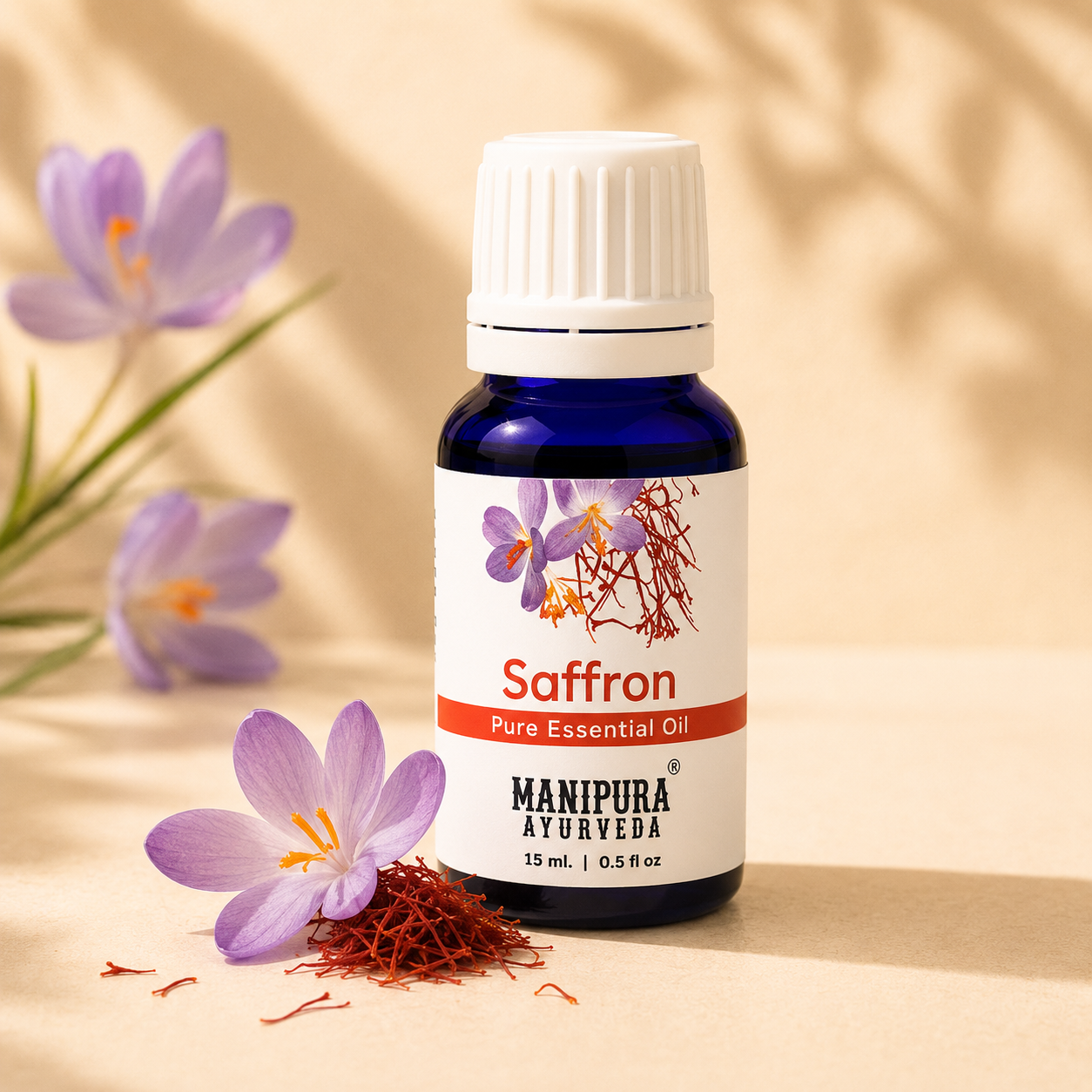
Saffron is derived from the Crocus sativus flower, which is native to parts of Asia, the Mediterranean, and the Middle East. The flower thrives in temperate climates with well-drained soil and full sunlight. Saffron cultivation is labor-intensive, as each flower only produces three red stigmas (saffron threads), which must be harvested by hand.
The harvesting process is time-consuming, requiring careful handling of the delicate flowers. It takes approximately 75,000 flowers to produce a single pound of saffron, making it one of the most expensive spices in the world. Iran, India, and Spain are the largest producers of saffron, with regions such as Kashmir in India being particularly famous for its high-quality saffron.
Healing Modalities (Including Alternative Healing Like Pranic and Reiki):
● Pranic Healing: Saffron essential oil is used in Pranic Healing to balance the energy field and promote emotional healing. It is believed to have a powerful effect on the solar plexus chakra, helping to alleviate stress, anxiety, and emotional tension.
● Reiki: In Reiki healing, saffron essential oil is used to support mental clarity and emotional balance. It is often applied during sessions aimed at enhancing spiritual growth, promoting relaxation, and relieving emotional blockages.
● Aromatherapy: Saffron essential oil is a popular choice in aromatherapy for its uplifting, stress-relieving properties. It is used to calm the mind, reduce mental fatigue, and enhance emotional well-being.
Research and Studies:
While saffron essential oil has not been extensively researched, studies on the Crocus sativus plant indicate that it contains powerful antioxidants, such as carotenoids, that help protect the skin from oxidative stress. Saffron is also known for its anti-inflammatory and antidepressant effects, making it valuable in both skin care and emotional health.
Research has shown that saffron’s active compounds, including safranal and crocin, may have cognitive-enhancing properties, improve mood, and support memory function. A study published in the Journal of Affective Disorders found that saffron supplementation could help reduce symptoms of depression.
Ancient and Traditional Indian References:
In traditional Indian medicine, particularly Ayurveda, saffron has long been considered a valuable herb for its many health benefits. It is believed to have a warming, soothing effect on the body and is used to treat a variety of conditions, including digestive issues, depression, and skin problems. Saffron is also used in Ayurvedic beauty treatments, where it is believed to purify the skin, brighten the complexion, and reduce signs of aging.
Saffron is often used in Ayurvedic cooking, where it is prized for its ability to balance the three doshas (Vata, Pitta, and Kapha). It is thought to promote mental clarity, emotional well-being, and overall vitality. Saffron-infused milk is commonly used in Ayurvedic traditions to promote relaxation and enhance the beauty of the skin.
|